Presentation of the Best Practice
Target challenge
- Difficult access to water
- Water for irrigation and food production is not available
- Other (Please specify below)
- Insufficient water for urban irrigation
Area Typology
- Urban area
- Rural area
- Other (Please specify below)
- Peri-Urban area
Main beneficiaries
- Water Utilities
- Local Population
Funding
- National funding
Used technologies / tools
- Soil infiltration
- Sustainable Drainage Systems
- Reverse Osmosis
- Filtration
- Others
- RO – Reverse Osmosis
- SF – Sand Filter (if used)
- MMF – Multimedia Filter (if applicable)
- CF – Cartridge Filter
- HP Pump – High-Pressure Pump
- ERD – Energy Recovery Device
- UV – Ultraviolet Disinfection
- PV – Photovoltaic Solar System
Implementation site
Matrouh Governorate
NCW type
- Brackish water (BrW)
NCW USE
- Garden Irrigation
- Field irrigation
- Other (Please specify below)
Self-Assessment
TRL : Technology Levels
TRL9
Description of the innovative component:
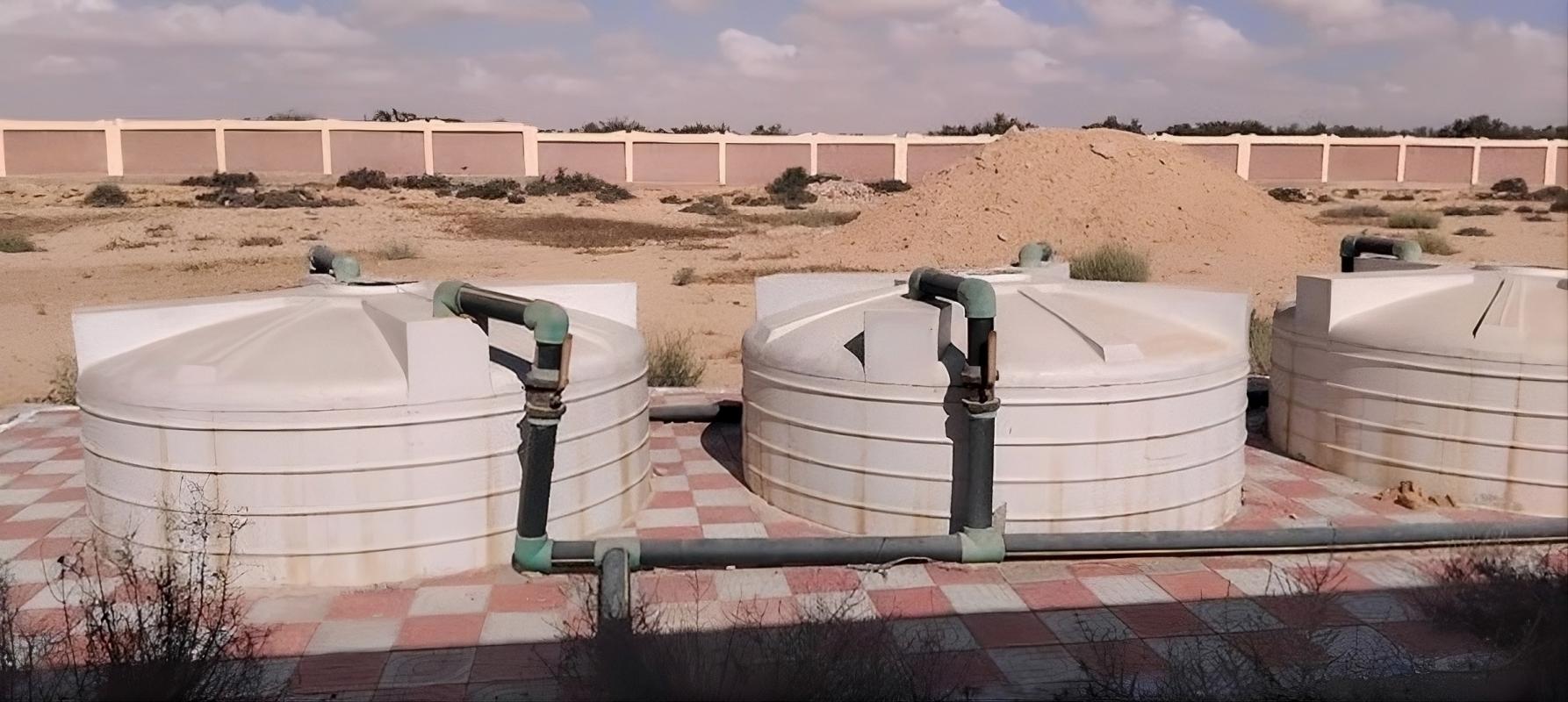
Yes, this Best Practice includes an innovative component through the integration of reverse osmosis (RO) desalination of brackish groundwater with solar energy as a renewable power source. This combination reduces dependency on conventional electricity and enhances the sustainability and environmental performance of the system. The innovation lies in developing a decentralized, solar-powered desalination solution adapted to the arid conditions of Matrouh Governorate, where grid electricity may be limited or unreliable. The system enables the efficient use of locally available brackish groundwater to produce safe water for domestic and agricultural uses in remote communities. By combining renewable energy with water desalination technology, the approach offers a low-carbon, climate-resilient, and scalable solution to water scarcity. This model can be replicated in other off-grid and water-scarce regions with similar environmental conditions.
Obstacles to implementation
- Isuffi cient funding instruments to support solution for NCW
- High cost of technological solutions
Obstacles to funding
The implementation of brackish groundwater desalination systems may face several funding-related challenges, including the high initial investment costs associated with desalination equipment, installation, and infrastructure. Additional difficulties may arise from limited availability of dedicated funding programs for small-scale water projects in remote areas, as well as the need for long-term financial support for operation and maintenance. Securing sufficient resources to ensure system sustainability and capacity building can also be challenging.
How your Best Practice is economically feasible ?
The financial feasibility of this Best Practice is ensured through the use of low operating-cost renewable energy, specifically solar power, which significantly reduces dependency on conventional electricity or fuel. Although the initial investment cost for installing solar desalination systems may be relatively high, the long-term operational and maintenance costs are minimal. This leads to a reduction in the cost per cubic meter of produced water over time. In addition, the system utilizes abundant solar radiation in arid regions such as Matrouh, maximizing resource efficiency and ensuring sustainable operation without recurring fuel expenses. Financial sustainability is further supported by the reduction of water transportation costs and the improved availability of safe irrigation and drinking water, which enhances agricultural productivity and livestock performance. Overall, the balance between moderate capital costs and very low operating costs ensures the economic viability and long-term affordability of solar-powered desalination systems.Result of this assessment
A general sustainability assessment was carried out for the brackish groundwater solar desalination system in Matrouh. Environmentally, the system relies on solar energy, reducing carbon emissions and dependence on fossil fuels, with brine disposal identified as a key environmental challenge requiring careful management. Economically, the system shows high feasibility due to low operational and maintenance costs compared with conventional desalination methods, despite higher initial capital investment. Socially, it enhances local water supply reliability, supporting agricultural activities and improving livelihoods in rural communities. However, limitations include variability in solar energy availability and the need for periodic maintenance of membranes and system components, which may affect long-term performance.Enviromental impact
SDGs
Validation/upscaling
Yes. The desalination system has demonstrated its effectiveness in providing a reliable source of freshwater from brackish groundwater under the arid conditions of Matrouh Governorate. The results…
Potentiel of exploitation/outscaling
Yes, there is strong potential for replication and upscaling of this best practice. The desalination of brackish groundwater using reverse osmosis technology is a flexible and scalable solution that…
Lessons learnt
Several important lessons were learned during the design and implementation of the brackish groundwater desalination best practice in Matrouh. Early integration of site-specific hydrogeological…
Recommandations
To improve the brackish groundwater desalination best practice in Matrouh, it is recommended to enhance system efficiency through optimized pre-treatment units and regular membrane maintenance to…
Highlighted KPI
Technical indicators
Average Treated flow rate
m3/Day
Salinity75000 g/Day
Economical indicators
Average total Cost
euro/m3 terated/day
Without consideration of the depreciation period


Social impact of the BP