Presentation of the Best Practice
Target challenge
- Overexploited groundwater
- Degradation of the Ecosystem (water stress)
- Vulnerability to climate Change
- Other (Please specify below)
- Insufficient water for urban irrigation
Area Typology
- Urban area
- Natural ecosystem
- Other (Please specify below)
- Green Areas or Parks
Main beneficiaries
- Water Utilities
- Local Population
- Municipalities
- Other (Please specify below)
- Park users, Municipality of Aglantzia (responsible for the operation and maintenance of the system)
Impact on the beneficiaries of your Best Practice:
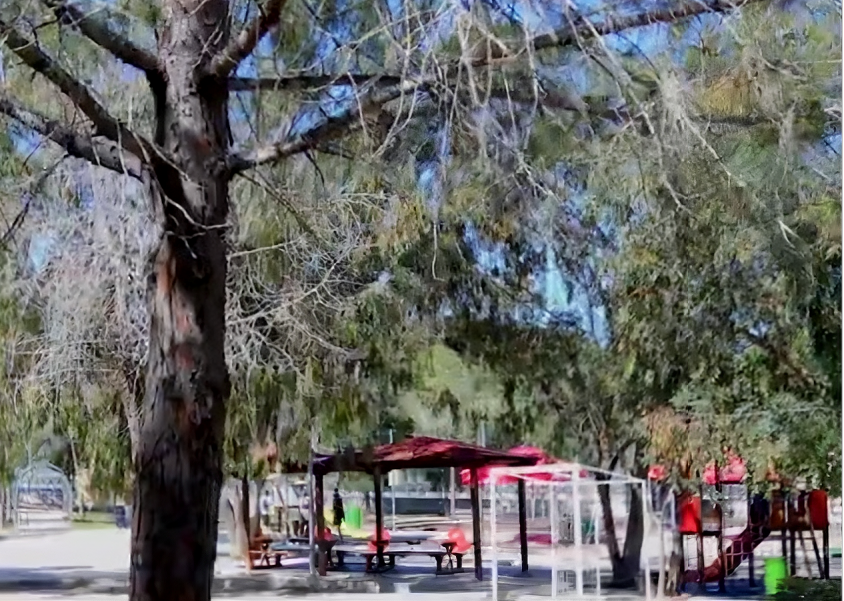
The benefit for the beneficiaries is that the use of treated wastewater to irrigate the park and other green spaces saves a total of 4,000,000 litres of water per year, allowing this volume to be allocated to other non-potable or potable uses. Moreover, there was a social component of this best practice which was the implementation of educational activities for children, having a significant positive impact on youth along with their teachers, by raising their awareness on water isuues. A dedicated event for the students on water conservation took place at the Park.
Funding
- Private financing
Used technologies / tools
- Chlorination
- Filtration
- One plastic tank of 20,000 liters volume to collect the treated wastewater.
- Flow switches for automatic refill of the tank
- Two filters (gravel and mesh) to remove solids from treated wastewater to prevent tank sedimentation
- A dosing system for treated wastewater chlorination, using a sensor to avoid over-chlorination
- One multi-valve system to distribute the treated wastewater to the irrigation system of the park
- Piping to refill trucks with treated wastewater to irrigate other parks off the network
- Submersible pump to distribute treated wastewater for park irrigation or refilling water trucks
- A control panel for the operation of the system
- Drip irrigation piping system to enhance the irrigation of the park
Implementation site
Cyprus
NCW type
- Municipal wastewater (MWW)
NCW USE
- Ecosystem
- Landscaping
- Other (Please specify below)
Self-Assessment
TRL : Technology Levels
TRL9
Description of the innovative component:
This Best Practice has an innovative technical component which is the integration of treated wastewater into an urban park irrigation network in order to replace the groundwater which was being used until recently for irrigating the parks and other close by green spaces which are not connected to the Municipality’s water distribution system. The treated wastewater is stored in a water tank, from which the Municipality also can withdraw water to irrigate other green spaces.
The Best Practice also relies on a municipal management arrangement and cooperation between public and private partners, dedicated financing, operational integration into the management of municipal green spaces, as well as awareness-raising activities through dedicated educational activities.
The Best Practice also relies on a municipal management arrangement and cooperation between public and private partners, dedicated financing, operational integration into the management of municipal green spaces, as well as awareness-raising activities through dedicated educational activities.
Obstacles to implementation
- Isuffi cient funding instruments to support solution for NCW
- Lack of public acceptance of water reuse
- Lack of training of professionals to take up best practices in their portfolio
Obstacles to funding
No difficulties were encountered. This was part of GWP-Med Technical Solution agenda access to funding and long-standing partnership with The Coca Cola Foundation.
How your Best Practice is economically feasible ?
The Municipality pays for the maintenance of the system (signed MoU). The costs are acquired though the Municipal taxes and a cost saving between using treated wastewater and fresh water is observedResult of this assessment
No sustainability assessment has been carried out in this project. The use of the treated wastewater was supported by evidence from previous related projects implemented in Cyprus (e.g use of treated wastewater in other parks Park of Academia)Enviromental impact
SDGs
Validation/upscaling
The best practice has been validated by the water utilities of Nicosia but not been upscaled yet due to lack of public funding. (More urgent priorities for Municipalities)
Potentiel of exploitation/outscaling
There is potential for replication and upscaling considering the easy access to the treated wastewater and the secondary uses (demand) that are present in Cyprus. Public funding needs to be allocated…
Lessons learnt
The key lesson learned from this best practice is that using treated wastewater for park irrigation can save significant amounts of clean drinking water. This approach is particularly valuable in…
Highlighted KPI
Technical indicators
Average Treated flow rate
m3/Day
Average Reused flow rate100 m3/Day
Salinity19.75 g/Day
Suspended solids SS550 g/Day
COD1375 g/Day
Economical indicators
Average total Cost
euro/m3 terated/day
Without consideration of the depreciation period
Average O&M cost
euro/m3 terated/day
Average benefit of reuse
euro/Day
Land footprint
1.00
m2/m3/day


Social impact of the BP